
How Heat and Seasons Affect Solar Panel Efficiency and Pump Performance
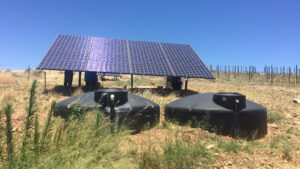
How Heat and Seasons Affect Solar Panel Efficiency and Pump Performance
When people think about solar panels, they usually assume one thing: hotter weather equals more power.
That sounds logical. It’s also not entirely true.
If you’re running a solar pumping system, understanding how seasonality and temperature affect performance can save you a lot of frustration and help you size systems correctly from the start.
Let’s break it down in plain terms.
Solar Panels Run on Sunlight, Not Heat
Solar panels produce power from sunlight (irradiance), not ambient temperature.
Clear, bright days matter more than hot ones.
That’s why you can actually see strong performance on cold, sunny winter days. The light is there, and the panels operate more efficiently.
Heat Actually Reduces Panel Efficiency
Here’s the part most people don’t expect.
As solar panels heat up, their voltage drops. When voltage drops, power output drops.
Most panels lose about:
- 0.3% to 0.5% efficiency per °C above 25°C (77°F)
In real-world terms:
- A panel sitting in full summer sun can easily reach 140°F to 170°F (60°C to 75°C)
- That can mean 10% to 20% less power than its rated output
So while summer has more sunlight overall, extreme heat quietly eats into performance.
Why Summer Still Produces More Water
Even with heat losses, summer is still your highest production season.
Here’s why:
- Longer days mean more total run time
- Higher sun angle increases total daily energy
- More consistent sunlight (fewer storms in many regions)
So even though efficiency dips, total daily output is usually highest in summer
That’s why systems are typically designed around peak summer demand, especially for livestock water.
Winter Performance: Better Efficiency, Less Time
In winter, panels are actually more efficient because they stay cooler.
But:
- Days are shorter
- Sun angle is lower
- Weather is often less consistent
The result:
- Higher efficiency per moment
- Lower total daily production
For pumping systems, that usually means slower fill rates or fewer run hours.
Spring and Fall: The Sweet Spot
This is the underrated part.
Spring and fall often deliver:
- Moderate temperatures (better efficiency)
- Good sunlight hours
- Stable conditions
In many systems, these seasons can produce surprisingly strong and consistent output
What This Means for Solar Pump Design
This is where it really matters.
If you size a system based only on panel wattage and ignore temperature and seasonal changes, you’re going to miss.
Good system design accounts for:
- Worst-case heat losses
- Seasonal sunlight variation
- Water demand timing (livestock vs irrigation)
- Storage needs (tank sizing becomes critical)
The reality is:
Solar pumping systems don’t fail because of bad panels. They fail because of bad assumptions.
Practical Takeaways
- Hotter doesn’t mean better for solar panels
- Summer gives you the most water, even with efficiency losses
- Winter requires planning because of reduced run time
- Storage is your buffer against seasonal swings
- Proper system sizing matters more than panel rating alone
Takeaway
Solar pumping is predictable when you understand it.
Heat will take some performance. Winter will take time. That’s not a problem if you plan for it.
The systems that work year-round aren’t oversized by accident, they’re designed with these realities in mind.